Video Content
The First Frame Is Everything: A Complete Guide to Video Hooks.
Every video starts with a choice — capture attention or lose it forever. This guide gives you every tool you need to win those first 3 seconds on every platform.
Every video starts with a choice — capture attention or lose it forever. This guide gives you every tool you need to win those first 3 seconds on every platform.
Written hooks operate in one dimension: text. Video hooks operate in three simultaneously. Every video begins with a visual signal, a verbal signal, and an audio signal — all firing at once in the viewer's brain. When all three align around the same hook concept, they create a force multiplier that no written hook can replicate. When they conflict, the viewer disengages instantly.
The thumbnail or first frame. Before a single word is spoken, the visual hook has already told the viewer whether this video is for them. Composition, subject expression, movement, and contrast all fire in under 200 milliseconds. A visual hook must answer one question instantly: "Does this look like something I care about?"
The first spoken words. These must either continue the promise of the visual hook or deliver a pattern interrupt — something the viewer did not expect from the visual. The verbal hook sets the explicit content promise and must do so within the first 3 seconds. Any longer and platform algorithms have already recorded early dropoff.
Sound and music cues that register before conscious processing. The right audio hook creates emotional priming — setting the viewer's mood and expectation before the verbal message lands. Platform-native sounds on TikTok and Reels create an additional hook layer: the familiar audio triggers automatic engagement from viewers who know the trend context.
The most effective video hooks use all three channels to say the same thing in different sensory languages. The visual shows it. The verbal states it. The audio feels it. When these three signals converge in the first 3 seconds, retention dramatically increases.
Platforms measure retention from second 0 to second 3 as the first gate. If viewers drop off in this window, the algorithm reads it as a signal that the content is not engaging and sharply restricts distribution. Getting past the 3-second gate is not a creative aspiration — it is a technical requirement for algorithmic reach.

Each platform has a distinct audience psychology, algorithmic structure, and content format — requiring a different hook strategy. What works on TikTok can fall flat on YouTube, and vice versa. Here is the complete breakdown.
TikTok auto-plays with the first frame immediately visible. Your first frame must be visually arresting — a person mid-expression, text overlay with a bold claim, or an action already in progress. Static or slow-opening first frames result in swipe-away rates above 70%.
TikTok captions appear overlaid at the bottom of the video. The caption hook works in parallel with the verbal hook — use it to pose a question or make a claim that creates urgency to watch. Captions are indexed for search, so they serve double duty as SEO hooks.
Native TikTok sounds carry cultural context that acts as an instant hook for users familiar with the trend. Original audio hooks use a distinctive sound or music drop timed to a visual event in the first second, creating a reason to stop scrolling.
Starting with a jump cut — a sharp editorial cut between two clips in the first second — creates visual disruption that forces a re-assessment. The viewer's brain registers "something happened" and pauses the scroll to understand what it missed.
YouTube's browse experience means the thumbnail hook fires before the viewer has clicked. The thumbnail must make a specific, believable promise — overblown claims train viewers to ignore thumbnails. The best thumbnail hooks pair a clear visual with minimal, high-contrast text (3–5 words maximum).
YouTube viewers have chosen to click — they grant a slightly longer attention window than TikTok or Reels. However, the verbal hook must still deliver within the first 15 seconds. Begin with the most interesting information, not context-building. The traditional "in this video I'm going to..." open is a retention killer.
Long-form YouTube requires a pattern interrupt to reset attention at regular intervals — but the most critical one is at second 0. Start mid-action, mid-sentence, or with an unexpected visual to differentiate your opening from the hundreds of similar videos in the same niche.
YouTube Analytics shows a predictable dropoff at the 30-second mark. Plant a secondary hook here — a preview of what's coming, a provocative claim about later content, or a direct viewer address — to push viewers through this critical retention cliff.
Instagram Reels automatically loop — a unique hook opportunity not available on other platforms. Designing your video to loop seamlessly (ending where it began, or ending on a cliffhanger that compels a re-watch) artificially boosts view count and signals high engagement to the algorithm.
Instagram Reels are frequently watched without sound, making overlay text the primary hook mechanism. Lead with a high-contrast text overlay that states your hook in 5–8 words maximum. The text must be readable within 2 seconds of the video starting.
Dynamic transitions — particularly those timed to a beat drop or that reveal a before/after transformation — serve as mid-hook engagement spikes. The anticipation of a transition completion keeps viewers watching through to the reveal, dramatically improving completion rates.
YouTube Shorts uses similar mechanics to TikTok — vertical, short, auto-play — but the audience has fundamentally different expectations. YouTube users skew toward educational and informational content, meaning Shorts hooks that promise specific, learnable information outperform entertainment-only hooks that dominate TikTok.
Unlike TikTok, YouTube Shorts are indexed and searchable. Your hook language should incorporate the search terms your target audience actually uses — not just trend language. A hook that functions as a spoken search query dramatically improves discoverability.
YouTube Shorts appear in the Shorts feed but also on creator channel pages. Use hooks that function as entry points to your long-form catalog — promising depth that Shorts cannot deliver, and directing viewers to your main channel. This viewer migration strategy turns Shorts reach into long-form subscribers.
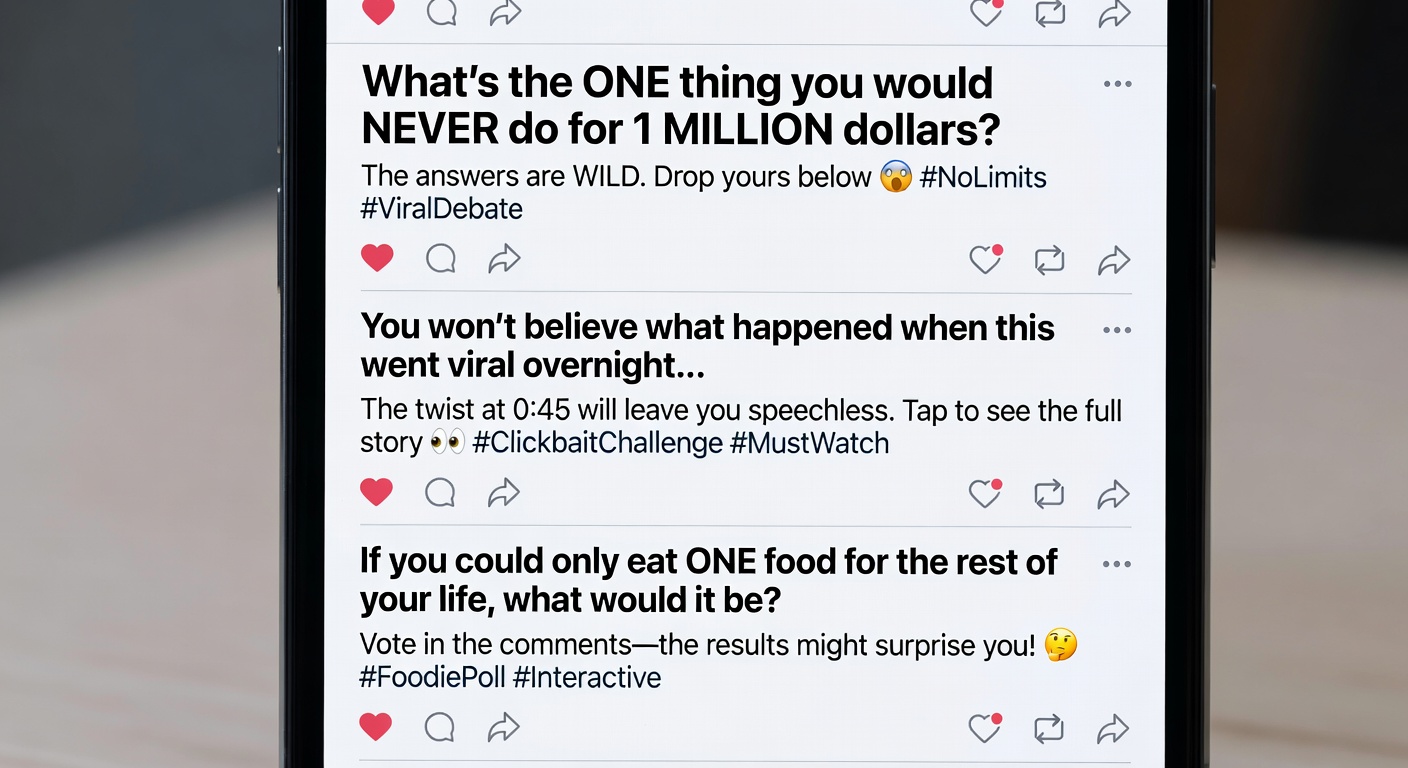
A visual hook is not just about what is in frame — it is about what the eye is drawn to first. The visual hierarchy of your first frame determines whether the viewer's attention is captured or scattered.
On YouTube, the thumbnail and first frame are different strategic assets. The thumbnail must work as a static image advertisement. The first frame must work as the opening of a video story. Design them to complement rather than duplicate each other.
These five fill-in script templates give you the first 10 seconds of a video — the most critical window for retention. Each template is tested across multiple platforms and content niches. Replace the bracketed placeholders with your specific content.
Use these templates as your starting point — then adapt the tone and language for your specific audience and platform.
Start by challenging what the viewer believes. Creates immediate cognitive engagement.
Lead with the outcome, then promise to explain how. Reverses the traditional narrative structure.
Create time pressure or relevance urgency. Works particularly well for trend-adjacent content.
Promise access to information the audience doesn't have. Creates exclusivity and FOMO simultaneously.
Open by describing your audience's current situation so accurately they feel immediately understood.
Post-production is not just cleanup — it is where many of the most powerful video hooks are created. These five editing techniques transform raw footage into hook-optimized content by creating visual and audio events that demand continued viewing.
A sudden, sharp zoom into the subject's face or a key visual element at the beginning of a statement. Creates visual emphasis that signals "pay attention to this." Used effectively as a hook by timing the zoom to coincide with the first word of your verbal hook.
A brief (2–4 frame) flash of high-contrast color — typically white or black — at the very first frame of the video. Acts as a visual "slap" that registers subconsciously before the viewer has consciously processed the image. Creates a subtle urgency to understand what just happened.
Timing text overlays to appear slightly after the spoken word creates a call-and-response effect that trains viewers to keep watching for the next text element. Specifically, place key hook text at second 0 and a follow-up text element at second 2–3 to drive viewers past the first algorithmic gate.
A deliberate moment of near-silence immediately followed by a sound design impact — a thud, a musical hit, or a sonic buildup and release — at the opening of the video. Auditory pattern interrupts are processed faster than visual ones, making a sound design drop one of the most reliable platform-agnostic hook techniques.
Opening on B-roll footage that is visually interesting or ambiguous — rather than the talking head or main shot — creates mystery that the viewer must resolve. When the main subject appears at second 2–3, it resets attention and gives the verbal hook maximum impact on a primed audience.
Creating great video hooks is half the work. The other half is knowing whether they're working — and having a systematic process to improve them. Here is how to use platform analytics to measure hook performance accurately.
YouTube Studio provides the most granular hook performance data of any platform. Focus on these specific metrics:
TikTok's analytics are less granular than YouTube's but provide specific hook performance signals:
The most reliable hook testing method is posting the same core content with different hooks on different days and comparing performance metrics at the 48-hour mark. Control for posting time, day of week, and promotion. Test one hook variable at a time: visual open, verbal hook language, or overlay text — never all three simultaneously.
Full video hook script packs for TikTok, YouTube, and Instagram Reels — customizable, tested, and ready to deploy on your next video.
Download Video Hook Scripts