Emotional Triggers That Drive Attention

Each trigger below maps to a distinct psychological mechanism. Understanding which trigger you are activating — and why — is the difference between a hook that accidentally works and one that reliably converts.

😰

Fear of Missing Out (FOMO)

FOMO activates the brain's loss-aversion system, which research shows is twice as powerful as the desire for gain. When viewers sense that others are getting something they are not, the urge to pay attention becomes almost involuntary.

"Everyone is using this hook formula — except you."

Best on: TikTok · Instagram · Twitter/X · Email

🔍

Curiosity

Curiosity exploits the information gap — the brain's compulsion to resolve incomplete knowledge. When you hint at information without delivering it, the mind enters a state of tension it is driven to resolve by continuing to watch or read.

"The content trick I've never seen anyone else talk about."

Best on: All platforms — universally effective

Surprise / Shock

Surprise is a hard interrupt — when the brain detects a pattern violation, it forces full attention to process the anomaly. Shock hooks work by stating something that contradicts common knowledge or expectation, causing an involuntary double-take.

"I stopped posting for 60 days and gained 40,000 followers."

Best on: TikTok · YouTube · Instagram Reels

🚀

Aspiration

Aspiration hooks paint a vivid picture of a desired future state. The brain responds to visualized goals as if they are partially achievable, which creates a forward-pull toward the content that promises to help get there.

"What a 7-figure content business looks like on the inside."

Best on: YouTube · LinkedIn · Instagram · Newsletter

🕰️

Nostalgia

Nostalgia triggers a warm, familiar emotional state that lowers psychological defenses and increases openness. When a hook references a shared past experience, it creates instant rapport between creator and viewer.

"Remember when going viral was actually about the content?"

Best on: Instagram · Facebook · Twitter/X · Email

🔥

Outrage / Controversy

Outrage is one of the most potent attention triggers because it activates both emotion and identity. When something challenges a viewer's values or beliefs, they feel a strong urge to engage — even if that engagement is to argue or refute.

"The advice most content coaches give you is actively destroying your growth."

Best on: Twitter/X · TikTok · LinkedIn

🤝

Empathy / Relatability

Empathy hooks work by creating a feeling of recognition — the viewer sees their own experience described so accurately that they feel understood. This emotional connection is a powerful reason to stay engaged, because people trust those who understand them.

"You built something you're proud of and nobody saw it. I know that feeling."

Best on: Instagram · LinkedIn · Podcast · Email

🏆

Pride / Identity

Identity-based hooks appeal to how a viewer sees themselves — or how they want to be seen. When content aligns with someone's self-image (I am a serious creator, I am data-driven), they engage because doing so reinforces their identity.

"This is for content creators who are actually serious about their craft."

Best on: LinkedIn · YouTube · Niche Communities
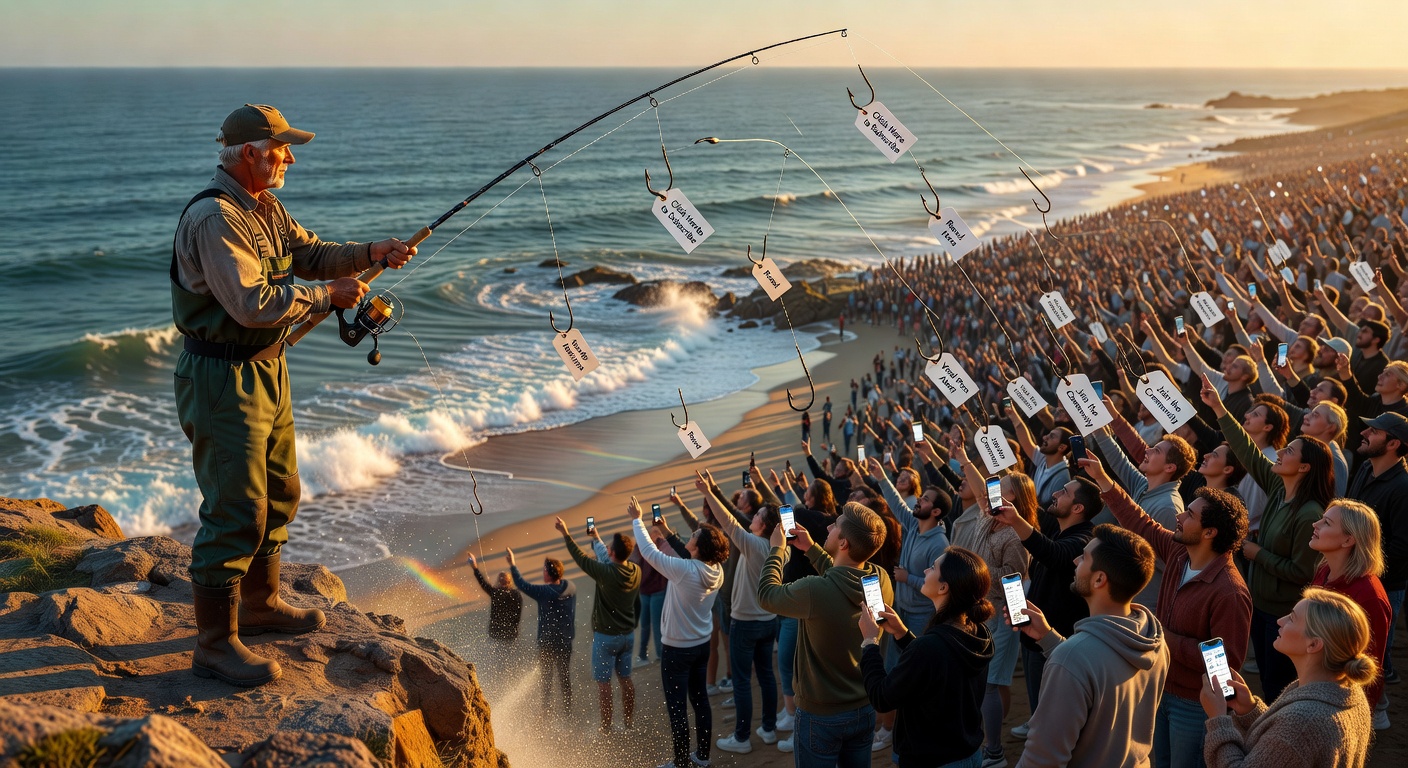
Diagram mapping emotional triggers to audience psychology

Understanding Your Audience's Emotional Landscape

Different audiences respond to different triggers based on their goals, fears, and identity. A LinkedIn audience of executives responds more to Pride and Authority than to Shock. A TikTok audience of aspiring creators responds to FOMO and Curiosity above all else.

Mapping emotional triggers to audience psychology — HookFirst Lab Research, 2026.

The Emotion-Hook Formula

Every great hook is the product of three deliberate choices. Get all three right and you have something the brain cannot scroll past.

TRIGGER + CONTEXT + PROMISE = Unstoppable Hook

01
Trigger

Choose the primary emotion you want to activate. This is your entry point into the viewer's attention. The trigger must be genuine — it cannot be manufactured. If you're using FOMO, there must actually be something being missed. If you're using surprise, the outcome must actually be surprising.

02
Context

Give the trigger a specific anchor in reality. Vague emotion is weak. Specific emotion is powerful. "Someone deleted their content" is forgettable. "I deleted 2 years of daily posting" creates a visceral sense of loss that makes the trigger land. Specificity is the amplifier.

03
Promise

Imply or state what the viewer will gain by continuing. The promise doesn't need to be explicit — "here's what happened" is a promise. So is "the one thing nobody teaches." The promise closes the loop by giving the viewer a reason to believe that staying is worth their time.

Book about content hooks and attention-grabbing writing

Emotion Is Not Manipulation — It's Communication

The most common objection we hear is that emotional triggers feel manipulative. But emotion is not a trick layered on top of content — it is the primary channel through which human communication has always worked. Every story ever told relies on emotional engagement.

"The goal of a hook is not to deceive — it's to communicate the value of your content in the emotional language the brain actually understands."

When you master emotional triggers, you are not exploiting your audience. You are giving your content the best possible chance of being seen, understood, and remembered. Bad content uses emotion to over-promise. Great content uses emotion to accurately represent the value inside.

Powerful Trigger Combinations

Stacking two emotional triggers in a single hook amplifies the effect exponentially. These are the three most effective combinations we have documented across thousands of posts.

FOMO + Curiosity
FOMO Curiosity

This combination creates urgency and an information gap simultaneously. The viewer feels they are missing something — and they don't know exactly what it is, which makes the pull even stronger. Works particularly well for trend-based and educational content.

"The hook formula that's quietly turning small accounts into 6-figure creators — and almost nobody knows it exists yet."
Shock + Aspiration
Shock Aspiration

Shock breaks the expected pattern, then aspiration fills the gap with a positive vision. The viewer is surprised and then immediately given a reason to care. This combination is especially effective for transformation content and case studies.

"I stopped using every social media 'best practice' I knew — and built a $300K content business in 8 months."
Empathy + Outrage
Empathy Outrage

This combination first makes the viewer feel understood, then gives them a target for their frustration. The empathy lowers defenses; the outrage energizes engagement. Highly shareable because viewers want others who share the frustration to see it too.

"You're working harder than anyone I know — and the system is deliberately designed to make sure you stay invisible."
Brainstorming session for creating emotionally resonant content hooks

Apply These Triggers With Our Templates

Every emotional trigger above has a corresponding set of fill-in-the-blank templates. Stop writing hooks from scratch — use our proven frameworks and customize them for your niche.

Browse Hook Templates