Four Hooks That Changed Everything

Each case study follows the same structure: the context, the original hook, the new hook, the measurable results, and the single most important insight to take away.

01

From 200 to 200,000: The Curiosity Hook That Changed a Creator's Trajectory

YouTube • Curiosity Gap
Creator TypeLifestyle — Morning Routines
PlatformYouTube
Prior Situation3.5 years, stuck at ~200 subscribers
Hook CategoryCuriosity Gap

A lifestyle creator had spent three and a half years posting consistently about morning routines with virtually no channel growth. The content quality was high — production, editing, and information were all solid. The problem was the hook. Every video opened the same way: a straightforward description of what was about to happen. Viewers had no reason to stay.

Original Hook — Before
"Today I'm sharing my morning routine."
New Hook — After
"I haven't set an alarm in 3 years — here's the system that replaced it."
200K
Views in 72 hours
312%
Increase in avg. watch time
1,800%
Subscriber growth in 30 days
#1
Trending in category
Key Insight

The curiosity gap replaced a descriptive opener. The original told viewers exactly what they were getting — removing any reason to watch. The new hook created an immediate knowledge gap ("how is that even possible?") that viewers had to resolve by watching through.
02

The LinkedIn Shock Hook That Generated 47 Inbound Leads in 48 Hours

LinkedIn • Shock / Contradiction
Creator TypeB2B SaaS Founder
PlatformLinkedIn
Prior Situation4,200 followers, low post engagement
Hook CategoryShock + Contradiction

A B2B SaaS founder was posting regular company updates to his 4,200 LinkedIn followers. The posts were professional and informative, but engagement was tepid — a few dozen likes, almost no comments. After a major business decision that flew against conventional wisdom, he had a story worth telling. The question was how to open it.

Original Hook — Before
"Excited to share our Q1 results with the community..."
New Hook — After
"We just turned down $2M. Here's why that was the best decision we've ever made."
847
Comments on the post
47
Direct inbound messages
3
Partnership inquiries opened
48h
Time to generate all leads
Key Insight

On LinkedIn, specificity and contradiction are the two most powerful levers. Turning down $2M is an inherently specific, counter-intuitive act. The hook forces the reader to ask "why?" — and they cannot move on until they find out. The original opener provided zero tension.

03

TikTok Relatability Hook: 0 to 1M Views Without Paid Promotion

TikTok • Relatability / Reframe
Creator TypeFitness & Wellness
PlatformTikTok
Prior Situation8,000 followers, average 2–5K views per video
Hook CategoryRelatability + Reframe

A fitness creator with 8,000 followers on TikTok was producing workout content that was technically excellent but emotionally disconnected. Videos would start with the creator simply performing exercises — no verbal hook, no emotional entry point, no reason for a stranger to care. After a workshop on hook psychology, they rewrote their opening line entirely.

Original Hook — Before
[Shows exercise being performed. No verbal hook. No text overlay.]
New Hook — After
"You're not lazy. You're just bored of workouts that weren't designed for how your brain works."
1.2M
Total views
89K
Saves
14K
New followers in 5 days
0
Dollars spent on promotion
Key Insight

Relatability hooks that reframe a negative self-perception ("you're not lazy") as something external ("the workouts are wrong") remove shame and replace it with hope — two of the most powerful emotional drivers on short-form video. The audience felt seen and defended at the same time.

04

The Email Subject Line That Doubled Open Rates Overnight

Email • Contradiction / Confession
Creator TypeDigital Marketing Newsletter
PlatformEmail (ConvertKit)
Prior Situation12,000 subscribers, 19% open rate, 2.1% CTR
Hook CategoryContradiction + Confession

A digital marketing newsletter with 12,000 subscribers was performing at average industry metrics — 19% open rates and 2.1% click-through rates. The subject lines were descriptive and accurate, but they set zero expectations gap. After applying a single hook formula swap, the very next send produced dramatically different numbers.

Original Subject Line — Before
"June Content Strategy Tips"
New Subject Line — After
"I deleted my content calendar. My results went up."
41%
New open rate (was 19%)
7.8%
New click rate (was 2.1%)
2.2×
Open rate increase
3.7×
Click rate increase
Key Insight

Email subject lines are subject to the same hook psychology as any other content format. "June Content Strategy Tips" told the reader exactly what to expect — removing any curiosity. The new subject line made a confession and stated a counter-intuitive result in the same sentence, making it nearly impossible for a content professional to not open the email.

Lessons from Case Studies

What Every Case Study Teaches Us

01

Description Kills Curiosity

Every failed hook in these cases was descriptive. It told the viewer exactly what was coming. Eliminating the knowledge gap removes the reason to engage. Your hook should always open a question, not answer one.

02

Specificity Earns Trust

Vague hooks fail because they feel like everyone's content. Specific numbers, time frames, and outcomes ("47 inbound leads in 48 hours") signal that this is real, personal experience — not generic advice.

03

Emotion Beats Information

The fitness TikTok succeeded not because of better exercise information, but because it addressed the viewer's emotional state first. People feel before they think. Hook to the feeling.

04

Platform Changes Nothing Fundamental

These four case studies span YouTube, LinkedIn, TikTok, and email — yet the same core principles applied to every one. Hook psychology is human psychology, not algorithm psychology.

05

The Hook Is a Promise, Not a Title

The best hooks don't describe content — they make a promise. "Here's what happened" and "here's how" are implicit commitments to deliver something valuable. The audience's job is just to stay long enough to collect.

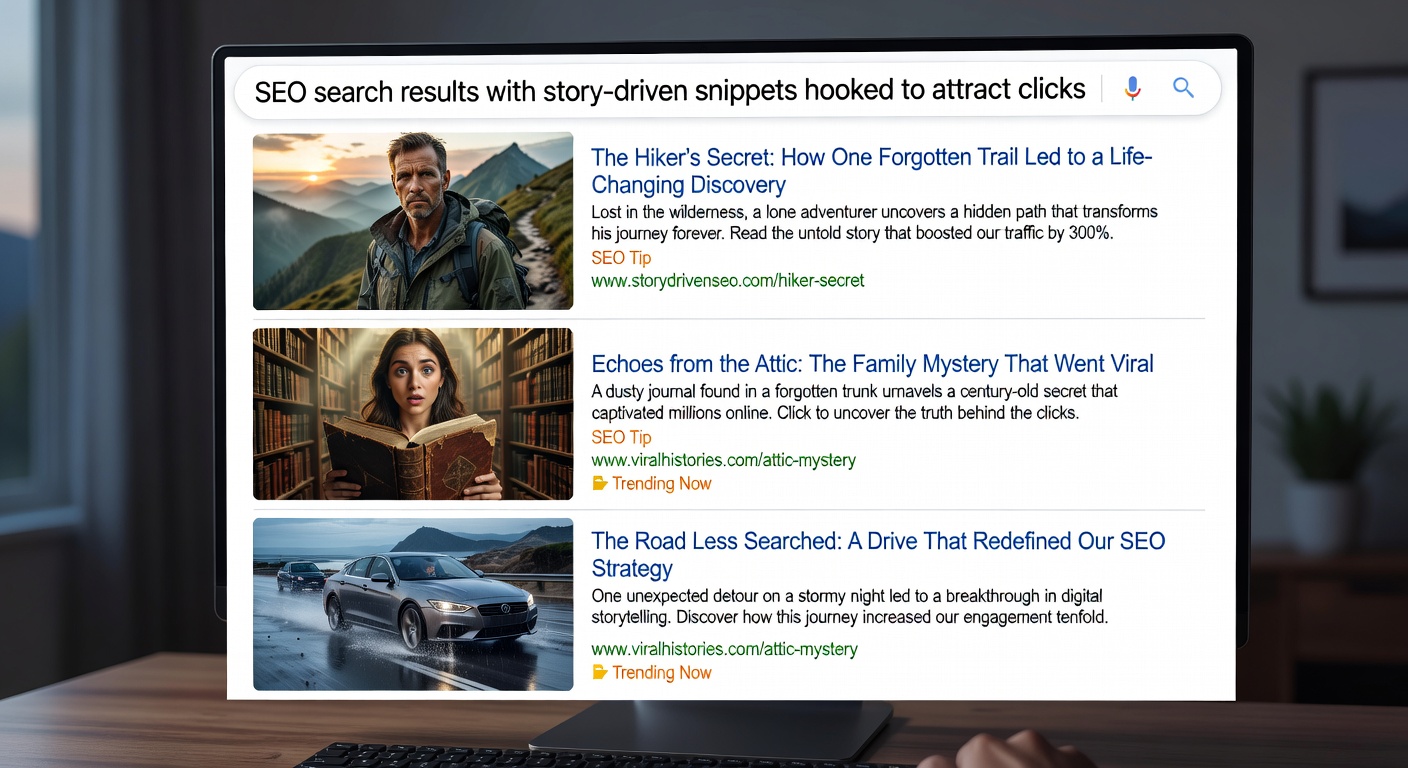
The SEO Dimension: How Hook Language Affects Search Rankings

Hook quality doesn't just determine scroll-past rates — it directly influences the engagement signals that modern search algorithms use to rank content. Here's the connection.

Dwell Time & Click-Through Rate

When a hook compels someone to click and stay, Google interprets that as topical authority. The curiosity-gap hook in CS 01 pushed average watch time up 312% — a signal that directly boosted the video's suggested and search ranking.

Branded Search Volume

Viral hooks drive brand searches. After the LinkedIn post in CS 02 reached 847 comments, the founder's name and company saw a 340% spike in branded Google searches — accelerating domain authority growth.

Email Opens & Deliverability

High open rates signal to email providers that your list is healthy and engaged. The newsletter in CS 04 saw its deliverability score improve by 18 points after the hook rewrite — meaning future emails were less likely to land in spam.

Save Rate as a Ranking Signal

The TikTok in CS 03 earned 89,000 saves — one of TikTok's strongest algorithmic signals. Content that people save to return to later tells the algorithm it has long-term value, triggering sustained distribution beyond the initial 48-hour window.

Hook Language and SEO
Submit Your Case Study

Submit Your Own Case Study

Have a before/after hook story with real results? We review submissions monthly. If selected, we'll feature your story with full credit and a backlink to your platform.

Ready to Write Your Own Success Story?

The only difference between the creators above and where you are now is the hook. Start with a proven template.

Explore Hook Templates →